
Your ball is in the fairway, the flag is tucked behind a bunker, and you're between clubs. Before reaching for one, you want to know the carry over the sand and how much green you have to work with.
Golf smart glasses put selected numbers in view while you study that shot. Whether they're worth adding to your bag depends on how often you'd use that convenience.
Golf smart glasses may be worth buying if you regularly use course yardages and want selected information in your line of sight. Their value depends on comfort, outdoor readability, phone requirements, and what they add beyond your current app, watch, or rangefinder. For basic distances on occasional rounds, a simpler setup may be enough.
What Would Golf Smart Glasses Change About Your Round?
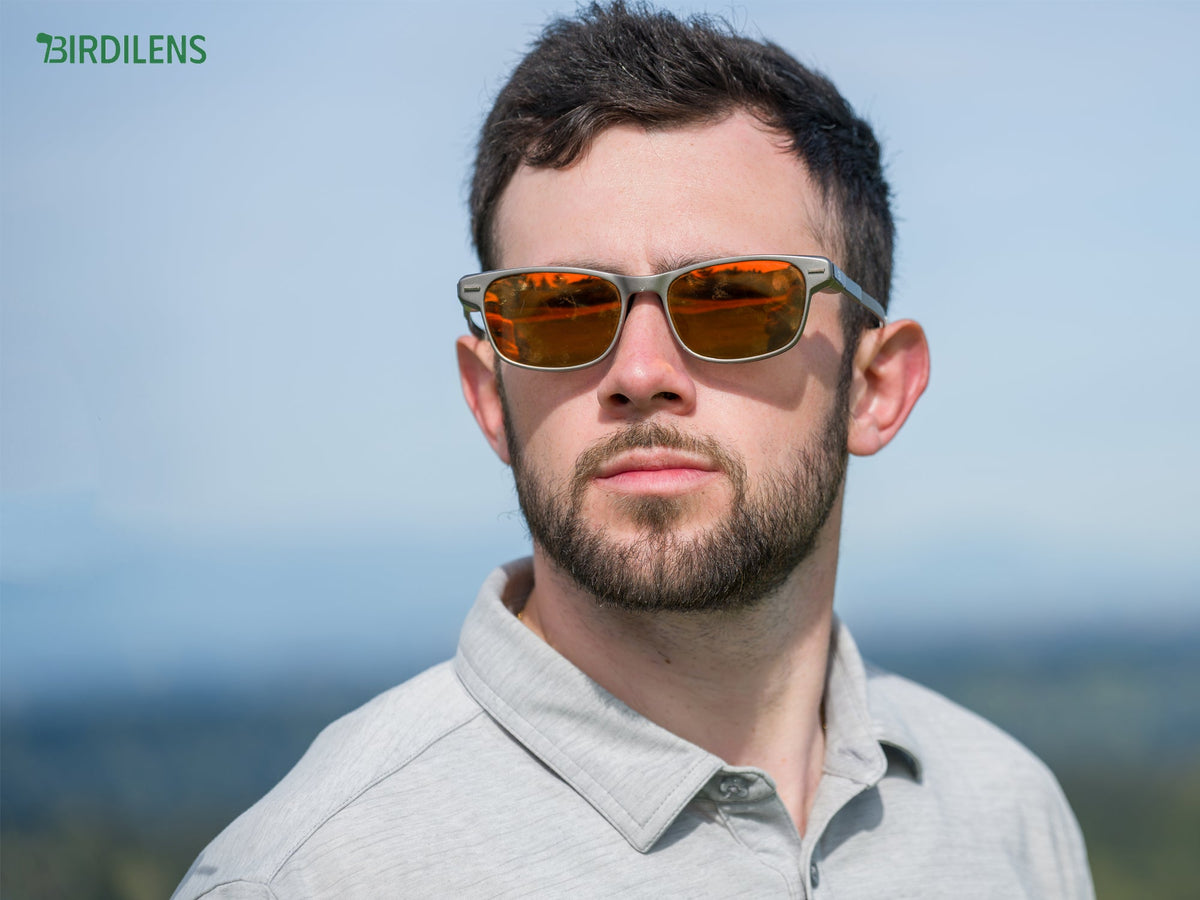
With BirdiLens GV1, front, center, and back green distances, hazards, and course information appear in an eyes-up display. The BirdiLens app supplies the course information and manages connected settings.
These are distinct parts of the system. GPS calculates distances using your position and mapped course locations; the glasses display selected results. A laser rangefinder measures a visible target directly. Understanding that difference helps you decide what the glasses would add to your setup.

When an Eyes-Up View Starts to Make Sense
You're Playing a Course You Don't Know
The fairway disappears over a rise, and the scorecard doesn't tell you enough to choose a landing area. You need the distance to the bunker at the corner and an idea of where the dogleg turns.
A mapped view helps you work out the hole. Selected hazard distances in your glasses let you refer to those numbers while facing the terrain ahead. That's a useful combination for golfers who travel, play public courses, or regularly join friends somewhere new.
There's Trouble Short and Limited Room Long
Imagine an approach with a bunker carry of 148 yards, a mapped green center at 155, and a back edge at 169. These are illustrative distances, but the decision is familiar: will your normal club cover the bunker without bringing the long miss into play?
The center yardage alone doesn't answer that. The carry requirement and green depth give you a clearer picture of the landing area.
Having those numbers available together can help you settle on a target and club. You'll still account for your normal carry range, the lie, and the wind.
You Walk Most of Your Rounds
When you're carrying clubs or pushing a cart, checking a phone adds another small task between reaching the ball and getting ready to hit. It becomes more noticeable when you need several map checks on unfamiliar holes.
GV1 offers voice and gesture controls for supported functions, so you can access information while the phone stays stored. If that suits the way you move around the course, the convenience has a practical purpose. See Golf GPS Without Looking at Your Phone for more on the interaction.
How Do They Fit Alongside Your Current Golf Tools?
Consider the part of your current routine you'd like to improve before deciding which device to add.
| What you use now | What it already handles | Where glasses may add value |
|---|---|---|
| Golf GPS app | Detailed hole maps, yardages, scoring, and settings | Selected information without taking out the phone |
| GPS watch | Quick yardages from the wrist | Course information in view while you study the hole |
| Laser rangefinder | Direct distance to a visible flag or target | Mapped hazards and green context around the measured target |
You may still want your laser for a flag measurement or your phone for a fuller map. Include the glasses' purchase price, lens options, and required accessories in your budget without assuming they'll replace everything you own.
If a single glance at your watch already gives you all the information you use, the reason to add glasses is less compelling.
What Should You Check Before Buying?
The Future of AR Golf Glasses explores how this kind of interface fits into a round.
What About Competition Play?
Under Rule 4.3, basic distance information is generally permitted unless the Committee prohibits electronic distance devices. Using a device to measure elevation changes or recommend a club based on your ball's location is not permitted.
If you compete regularly, confirm how restricted functions can be disabled on the model you're considering. The guide to golf GPS apps in tournaments explains the distinctions.
Frequently Asked Questions
Can golf smart glasses replace a GPS watch?
They may cover your on-course yardage checks. A watch can still serve other purposes, including fitness tracking and everyday use.
Do golf smart glasses work without a phone?
Requirements vary by model. BirdiLens GV1 uses the BirdiLens app for course information and connected functions.
Will golf smart glasses improve my score?
They make information easier to access, but a lower score isn't guaranteed. Your target choices, contact, and putting still determine the result.
Share:
How Testing Shaped the BirdiLens GV1 Golf Smart Glasses
Can Golf Smart Glasses Replace Your Laser Rangefinder?