
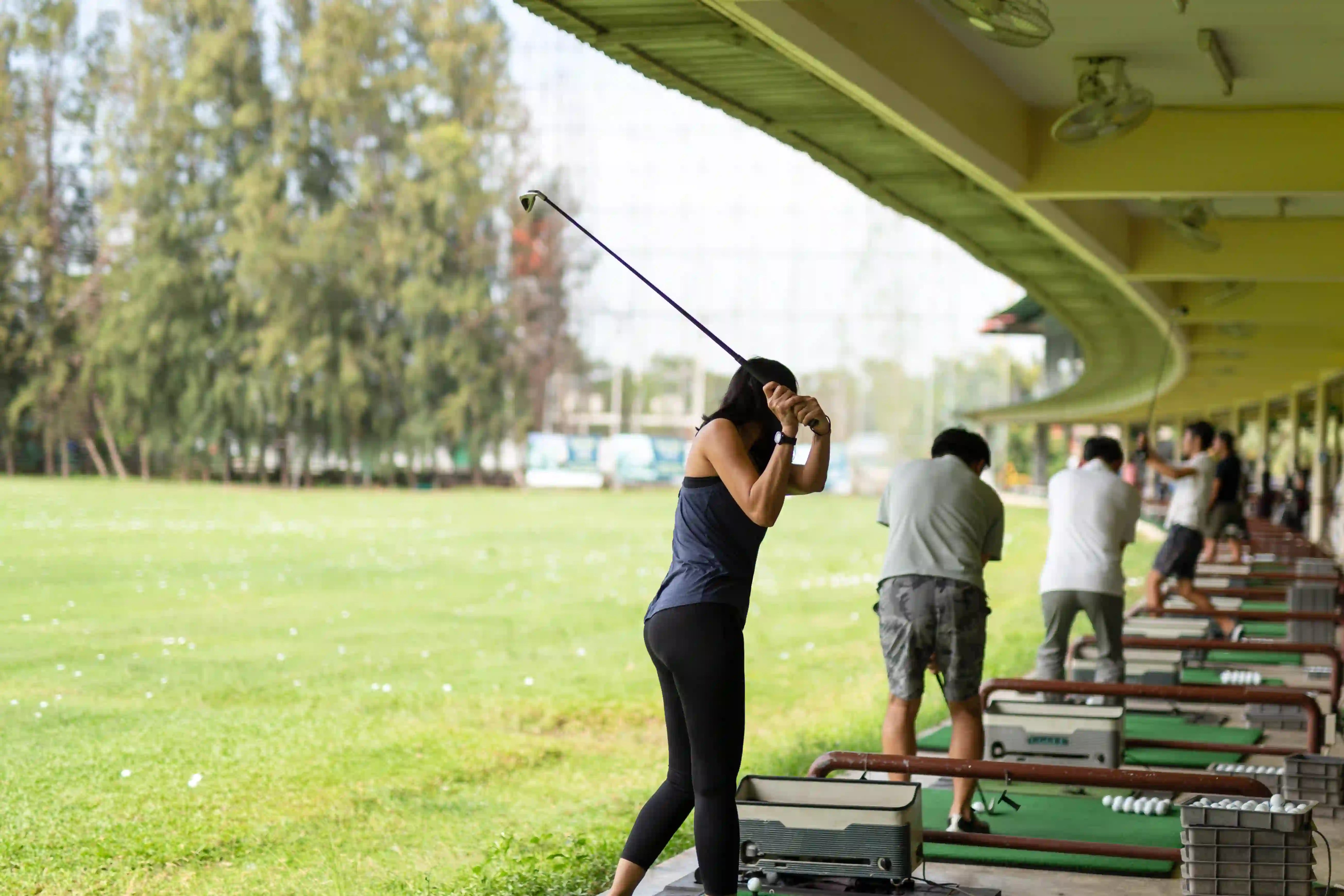
A lot of golfers know this feeling.
You hit it well on the range. The swing feels easy. Contact sounds better. The ball flight looks solid. After a good session, it is easy to think, this is finally going to show up during the next round.
Then you get to the course, and it feels like a different game.
The first tee shot has out of bounds on one side. The approach has water short and a bunker right. The ball is sitting slightly below your feet. The target is no longer a wide section of range. It is one shot, from one lie, with a real score attached to it.
That is why a good range session does not always become a good round. The range lets you work on the swing. The course asks you to choose a shot.
Why do golfers play better on the range than on the course?
Many golfers play better on the range because the range removes several parts of real golf: uneven lies, changing targets, pressure, penalties, and one-shot decisions. A good range swing does not always transfer to the course unless golfers practice with specific targets, consequences, club changes, and realistic shot decisions.
Five Reasons Your Range Game Does Not Transfer to the Course
The range and the course ask different things from your game. On the range, you can find rhythm, repeat swings, and fix mistakes quickly. On the course, every shot has a target, a lie, a consequence, and only one chance.
Here are the five biggest differences:
- Repetition creates rhythm. The range lets you hit the same club from the same lie until the swing starts to feel comfortable.
- Course targets are specific. On the course, you are not aiming at a general direction. You are choosing a line with trouble, angles, and a next shot attached to it.
- Course mistakes have consequences. A bad shot on the range disappears into the field. A bad shot on the course may mean water, out of bounds, a bunker, or a recovery from the trees.
- Lies constantly change. The course gives you slopes, rough, tight lies, uneven stances, and different turf conditions.
- Golf is a decision-making game. A good round is not just about making good swings. It is about choosing the right club, target, shot shape, and miss before you swing.
The Range Lets You Repeat. The Course Does Not.
Repetition is what makes the range feel comfortable.
On the range, you can hit seven 7-irons in a row. If the first one is thin, the next one can be better. If one leaks right, you adjust. After a few balls, your body finds a rhythm. The lie is the same, the stance is the same, and the target barely changes.
The course does not give you that rhythm for free.
You get one ball from one lie to one target. If you miss it, you do not get to pull another ball over and try again. You have to play the next shot from wherever the first one finished.
That is why a player can feel good on the range and uncomfortable on the course. The swing may not be completely different. The task is different.

Range Targets Are Often Too Vague
A range target is often a direction. A course target is a decision.
On the range, "toward the 150 sign" or "somewhere at that flag" can feel specific enough. On the course, the target has more attached to it. A flag tucked behind a bunker is not just a direction. A fairway with water right is not just an open strip of grass. A layup area is not just "short of the green." It has to leave a number, an angle, and a shot you can actually play.
That is where range practice often falls short. Many golfers practice hitting balls, but not choosing shots.
If your range targets are always loose, the course can feel uncomfortable because the target suddenly has to be precise. You are no longer swinging at open space. You are making a shot decision with trouble around it.
There Is No Penalty on the Range
The range is forgiving in a way the course never is.
A slice on the range lands next to a hundred other balls. A thin iron rolls out and disappears into the field. A pulled wedge looks ugly for a second, then you hit another one.
On the course, that same shot becomes the next problem. It may be out of bounds, in water, behind a tree, short-sided in rough, or buried in a bunker. The swing may look similar, but the cost is completely different.
That cost changes how golfers feel over the ball. A carry over water feels different from a range ball hit into open space. A tee shot with trees right and out of bounds left feels different from a driver on a flat mat.
Practice does not need to feel scary, but it should sometimes have consequences. A better range session can include a few reps where you pick one target, choose one miss you cannot allow, and hit one ball as if it counts.
That is less comfortable than beating balls, but it looks a lot more like golf.
Course Lies Make the Same Swing Play Differently
The range usually gives you a clean, level lie.
The course rarely does.
A ball above your feet can curve more than expected. A ball below your feet can make solid contact harder. A downhill lie can change launch. Rough can take spin off the ball. Wet turf can punish heavy contact. A tight lie can make a simple wedge feel completely different.
That is one reason the same swing can feel different on the course. The course adds small adjustments that the range often removes: slope, grass, stance, wind, pressure, and target shape.
A good swing still matters. But on the course, the shot is not only a swing. It is a read of the situation.
Good Practice Needs Course-Like Decisions
If you want your range game to travel, part of your practice has to look more like the course.
That does not mean every range session needs to feel like a tournament. It means you should sometimes practice the choices that happen before the swing: the club, the target, the safe side, and the miss you can live with.
Instead of always hitting the same club ten times in a row, mix in a few one-ball reps. Pick a specific target. Change clubs. Decide where the bad miss is. Ask whether you would actually choose that shot during a round.
A useful range session asks better questions:
- What is my target?
- What is my carry window with this club?
- What miss am I trying to avoid?
- Where would this ball leave me on the course?
- Would I actually choose this shot during a round?
Practice data helps when it turns into a decision tool. Knowing your carry range, common miss, launch window, or strike pattern matters because it helps you choose smarter shots on the course. The value of launch monitor data is not one perfect swing. It is learning what your normal shots really look like.
Good practice should not only make you feel better on the range. It should make you less surprised on the course.
How BirdiLens Connects Practice and Course Context
Part of the range-to-course gap comes from keeping practice and play too separate. Practice data lives in one place. Course decisions happen somewhere else.
This is the kind of gap BirdiLens is trying to close.
A personal launch monitor can help golfers understand useful practice patterns, such as carry baseline, ball flight, strike tendencies, and common misses. But that information only becomes useful on the course when it connects to the shot in front of the player.
The BirdiLens app brings course context back into the picture: the target, the trouble, the carry that matters, the pin position, and the safer side of the hole.
A 7-iron that looks good on the range still has to fit the lie, wind, pin, carry, and miss on the course. That is why understanding a shot as a complete decision matters more than looking at the swing or the number by itself.
The goal is not to make the decision for the golfer. It is to make the right information easier to connect before the shot.

Practice the Shot, Not Just the Swing
The range can make golf feel simple. Same lie. Same rhythm. Same target. Another ball waiting if the last one was not good.
The course makes golf real. One ball. One lie. One target. One decision.
That is why your range game does not always show up during a round. It is not always because your swing disappeared. Often, it is because the course added everything the range removed: pressure, penalties, uneven lies, specific targets, and the need to choose a smart shot the first time.
If you want your practice to travel, make it more like golf. Pick targets. Change clubs. Create consequences. Learn your carry windows. Notice your usual miss. Practice choosing the shot, not just making the swing.
That is how range work starts to become course golf.
FAQ
Why do I play worse on the course than on the range?
The short answer? Consequences. The range removes the pressure of uneven lies, hazards, and real scorecards. It lets you find a rhythm by hitting the same club repeatedly. The course, however, demands that you hit one specific shot, from one specific lie, with no second chance, on the very first try.
How do I actually take my range game to the course?
Start by making part of your practice look more like the course. Change clubs often, pick specific targets, and use one-ball drills where a missed target counts as a penalty. You are trying to practice decisions, not just your swing motion.
Why does my ball flight look so different during a round?
A lot of the time, it is the lie, turf, or setup. Range mats give you a perfect, flat lie and can hide fat shots. On the course, the ball might be slightly above your feet, sitting down in rough, or on a downhill slope. Those small changes can alter contact, launch, curve, and distance.
Share:
How to Choose the Right Target in Golf
How to Use Launch Monitor Data to Make Better On-Course Decisions