
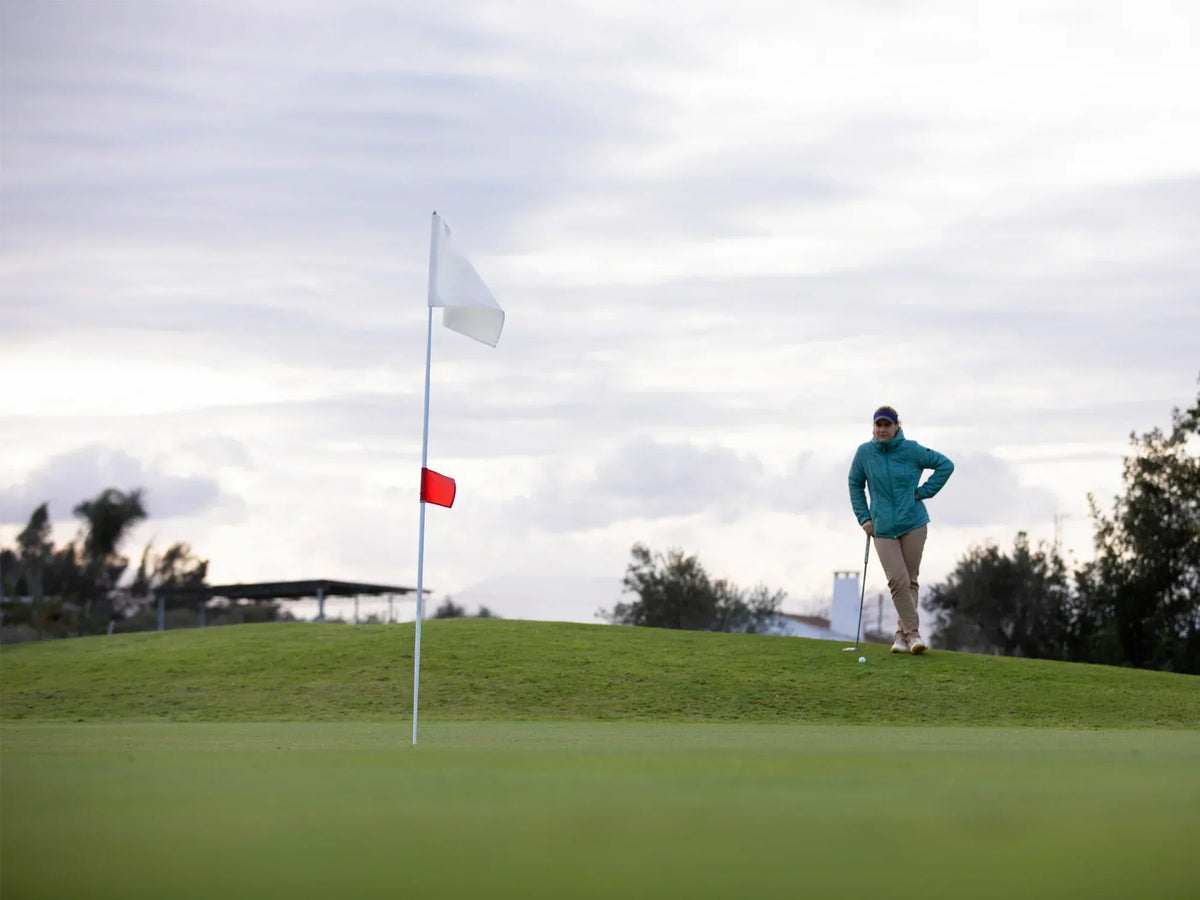
An 8:00 a.m. tee time does not necessarily mean you will be driving home at noon. If you are booking a round before a meeting, dinner, or a flight, the course's expected pace matters more than the fastest round you have ever played.
Plan on about four hours for 18 holes, with roughly 3½ to 4½ hours being a useful planning range for many groups. A busy or difficult course can take longer. Nine holes often takes around two hours. Check the course's published pace before making plans around your finish time.
How Long Should You Allow for 18 Holes?
Group size gives you a starting estimate:
| Group | Planning Estimate for 18 Holes |
|---|---|
| One player on an open course | About 2–3 hours |
| Two players | About 3–3½ hours |
| Three players | About 3–4 hours |
| Four players | About 4–4½ hours |
These are planning estimates, not times required by the Rules of Golf. They work best when groups can move around the course without frequent waits. A single golfer behind a full tee sheet may finish at much the same time as everyone else.
The course's published pace should take priority over this table. A course with long transfers between holes, a difficult layout, a competition in progress, or cart-path-only conditions may expect more time.
How Long Does It Take to Play 9 Holes?
Allow about two hours for nine holes unless the course gives you a different estimate. An open course early in the morning or late in the day may be quicker. A busy nine-hole round can take longer.
Nine holes will not always take exactly half as long as 18. You may still wait to begin, check in with the starter, or encounter a slow group ahead. Some nine-hole routes also have a longer walk back to the clubhouse.
If you plan to warm up, rent clubs, or eat afterward, add that time separately.
What Affects the Length of a Golf Round?
Course Traffic
The group ahead often sets the practical limit on your pace. Two golfers who are ready to play still have to wait if the landing area or green is occupied.
Traffic can build throughout the day when groups take slightly longer than their tee-time spacing allows.
Group Size
More players usually mean more tee shots, approaches, putts, and trips to separate ball locations.
But a prepared foursome can move steadily, while a twosome that begins every decision only after reaching the ball can lose time on each hole.
Course Length and Layout
Scorecard yardage tells only part of the story. Long walks between a green and the next tee add time without adding golf shots.
Hills, blind landing areas, deep rough, trees, and frequent forced carries can also slow movement or lead to more ball searches.
Player Routine
Measuring distance only when it is your turn, returning to the cart for another club, taking several practice swings, and waiting until the green to start reading a putt can all add time.
Weather
Wind may require another club decision. Rain adds covers, towels, wet grips, and other small delays.
Course Conditions
Cart-path-only rules can require repeated walks between the path and the ball. Heat may also call for more water and rest.
Is Riding in a Cart Always Faster Than Walking?
No. A cart helps cover long distances, particularly on a spread-out or hilly course. That advantage can shrink when two players share a cart and their balls finish on opposite sides of the hole.
Walking lets each player head directly toward their own ball and assess the next shot along the way. On a cart-path-only day, riding still involves considerable walking.
The better choice depends on the layout, course conditions, and what you are comfortable doing for the full round. Riding is not automatically the fastest option in every situation.
Where Does Most of the Time Go?
A hole involves more than making strokes. A group waits until it is safe to hit, checks distances and targets, plays, travels to the balls, searches when necessary, handles any relief, finishes on the green, and moves to the next tee.
One extra minute on every hole adds 18 minutes to the round.
Two extra minutes per hole adds 36 minutes.
That is why pace is easier to improve between shots than during the swing itself. You can prepare while another player is hitting and move promptly afterward without rushing anyone's actual shot.
How to Play Faster Without Rushing
A steady round comes from being ready when it is safe to play:
- Start checking your distance and choosing a target as you approach your ball.
- In stroke play, use ready golf when playing out of turn is safe and sensible.
- If you leave a shared cart, take the clubs you might need rather than making another trip.
- Look at your putt while others putt, without standing in their way or distracting them.
- Mark your ball so you can identify it quickly.
- If your ball may be lost outside a penalty area or may be out of bounds, announce and play a provisional ball before going forward.
- Record the previous hole's score at the next tee rather than beside the green.
A GPS app can make preparation easier when you use it before your turn. For example, you can check the hole map, distances, and hazards in BirdiLens as you approach your ball, then arrive with a clearer idea of the shot.
A short pre-shot checklist can help you settle on a target and club without restarting the decision each time you address the ball.
The Rules of Golf call for a prompt pace and allow safe, responsible ready golf in stroke play. Rule 18 limits a ball search to three minutes after the player or caddie begins searching and permits a provisional ball in the situations described above.
A provisional ball is generally not the procedure when the only concern is that the original ball entered a penalty area.
How to Estimate Your Finish Time Before Booking
Start with the course's published 18-hole pace. Add it to your tee time, then allow time before and after the round:
If your tee time is 9:00 a.m. and the course posts a four-hour, 20-minute pace, expect to finish near 1:20 p.m. on a normal day.
Arrive early enough to park, check in, and reach the first tee. If you need to return a cart, settle a score, or get to another appointment, leave room after 1:20 as well.
Ask whether the course is cart-path-only and whether a tournament or large outing is scheduled.
If your next commitment has a firm start time, allow for a slower round rather than planning around a best-case three hours.
Frequently Asked Questions
Can you play 18 holes in three hours?
Yes, particularly as a single or twosome on an open course. It is not a reliable booking estimate for a busy public course.
How long does 18 holes take for four golfers?
Around four to 4½ hours is a reasonable starting estimate. Use the course's posted pace if it differs, and allow longer when conditions or traffic warrant it.
How long does nine holes of golf take?
Plan on about two hours. An open course may be faster, while waiting on the first tee or behind other groups can extend the round.
Is walking slower than using a golf cart?
Not always. Carts help with long transfers, but walkers can go straight to their own balls. Shared carts and cart-path-only rules can reduce the time advantage of riding.
Why does a golf round sometimes take more than five hours?
Heavy traffic, delays that build between groups, a difficult layout, ball searches, weather, and slow movement between holes can all contribute. When the course is backed up, one group cannot remove all of that delay by playing faster.
Share:
How Course Rating and Slope Rating Describe Golf Course Difficulty
Yes, You Can Use Golf GPS Without Looking Down at Your Phone