
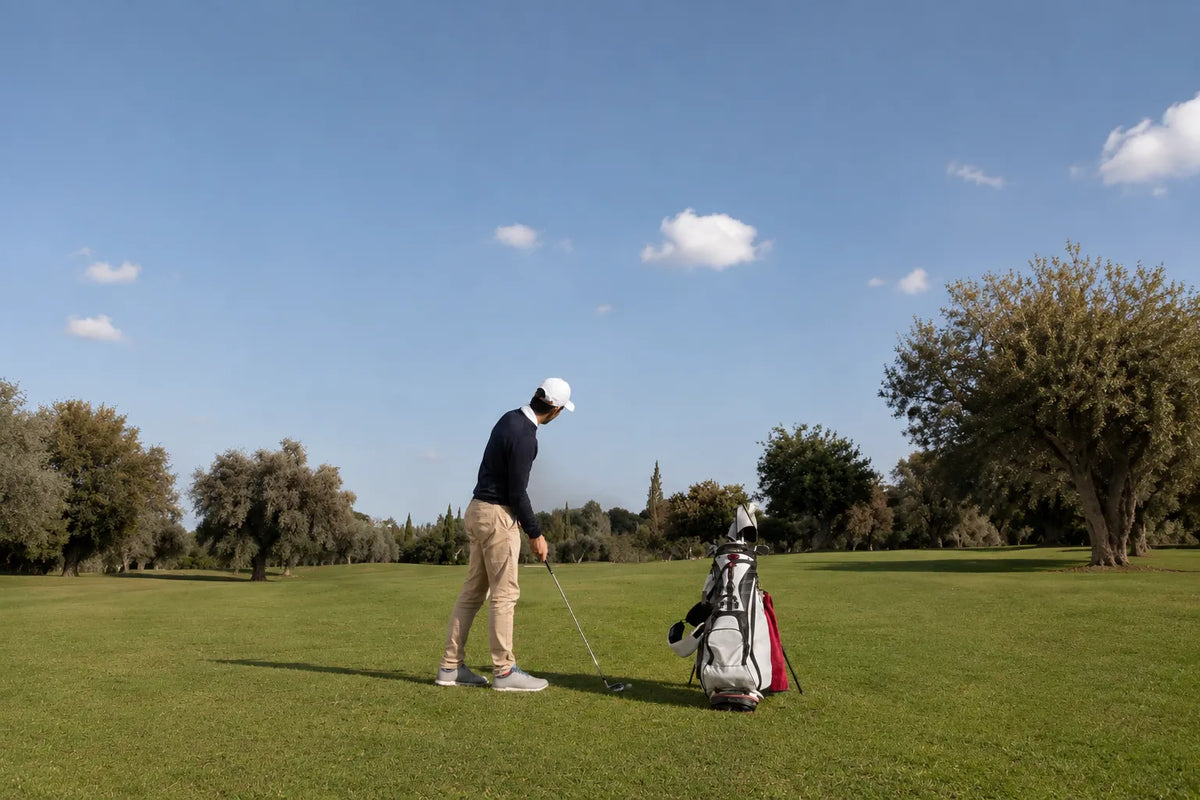
You step up to a shot you've hit a hundred times before.
150 yards. Same club. Same swing.
But this time, it comes up short. Or flies long.
Now you are wondering what changed.
Why Does the Same Golf Club Go Different Distances?
The same golf club can travel different distances because carry depends on strike quality, club speed, launch, spin, wind, elevation, temperature, lie, and the type of shot being played. A well-struck 7-iron from a clean fairway lie will not produce the same result as the same club hit from rough, into a headwind, or with off-center contact. Use a normal carry range rather than one fixed yardage when choosing a club.
We All Want a Simple Answer
If you've played golf long enough, you've probably asked the same question or heard someone else ask it: "What club do you hit from here?"
Especially around something like 150 yards, everyone seems to have an answer. One guy says 7-iron. Another says 8. Someone else swears it's a smooth 9.
And they can all be right because club choice depends on each golfer's normal carry, not on a universal club for a given yardage.
That is why choosing a club for 150 yards starts with the player's own distance pattern.
That's the part most golfers don't realize at first. We expect golf to give us a clean, repeatable answer. Same number, same club. But that's just not how the game works once you're actually out on the course.
What Changes the Distance of the Same Golf Club?
Here’s the tricky part: a lot of the time, your swing actually does feel the same.
You stand over the ball, make what feels like your normal move, and still don't get your "number." That's when golfers start thinking something's wrong with their swing. Sometimes the swing did change. Other times, the difference comes from strike quality, lie, or conditions that were easy to miss.
| Factor | How It Changes Distance |
|---|---|
| Strike quality | Off-center contact usually reduces ball speed and carry |
| Club speed | Changes ball speed and the amount of carry the shot can produce |
| Launch and spin | Affect trajectory, peak height, carry, and stopping behavior |
| Wind and elevation | Change how far the shot plays and how the ball moves in flight |
| Lie | Rough, sand, and uneven lies can change contact, launch, and spin |
| Ground conditions | Firm or soft turf mainly changes bounce and rollout after landing |
| Shot type | Full, partial, and knockdown shots produce different carry windows |
These factors do not affect every shot equally. A slight change in turf firmness may mainly change rollout, while an off-center strike or strong headwind can reduce carry before the ball reaches the landing area. The useful question is which factors matter for the shot in front of you.
Use a Carry Range, Not One Perfect Number
Golf club distance charts are useful starting points, but they cannot represent one golfer's strike pattern or the conditions on a particular shot. Club selection should begin with your own stock carry rather than a generic distance chart or the longest shot you remember hitting.
Instead of assigning one exact number to each club, use a normal carry window. If a 7-iron usually carries between 148 and 155 yards, that range is more useful than treating 152 yards as guaranteed.
The lower end of the window matters when the ball must clear a bunker, water, or a false front. The upper end matters when going long leaves the more difficult next shot.
Using a carry range also helps avoid common club-selection mistakes, such as relying on a career-best strike or ignoring the required carry.
Carry and total distance should also stay separate. Carry tells you what the ball can fly over. Total distance includes bounce and rollout, which change with trajectory, landing angle, and turf firmness.
The goal of learning to measure your normal carry distance is not to find one permanent number. It is to establish a reliable starting range for club selection.
Distance variation does not make your club data useless. It means each club should be treated as a range rather than an exact promise.
Choose the Club for the Shot in Front of You
A lot of golfers treat club selection like it's a lookup table. You see the number, match it to a club, and go.
A useful club decision starts with the number, then checks what surrounds it. They look at the number, but they also consider everything around the shot. Where's the pin? What's short? What's long? What’s the miss you can live with?
A 150-yard shot to the middle of the green is one thing. A 150-yard shot over a bunker to a front pin is a completely different decision. Same number. Completely different shot. The second shot may require more confidence in the club's lower carry limit, a different target, or a club that gives the normal miss more room.
How to Choose a Club When the Distance Changes
Instead of asking, "What club should I hit from 150 yards?" ask, "How is this 150-yard shot playing today?"
A practical sequence is:
- Start with your normal carry window.
- Identify the required carry and the most costly miss.
- Check how wind affects the shot, including any change in carry or lateral movement.
- Check whether slope changes how far the shot plays, then account for the lie and temperature when relevant.
- Choose a club and target that fit the available landing area.
With practice, this sequence can become a quick golf pre-shot checklist rather than a slow analysis before every swing.
This is not about finding a perfect number. It is about applying a reliable baseline to the shot in front of you.
There Is No Perfect Club. Focus on Better Decisions.
There is no universal club for a given yardage because golfers, strikes, and conditions change. More consistent decisions come from knowing your normal carry window and adjusting it to the shot in front of you.
That is also the thinking behind BirdiLens: organize distance and course context so the golfer can make a clearer club, target, and risk decision. The technology should support judgment, not replace it.
The goal is not to make every shot predictable. It is to make the club choice easier to understand and repeat.
FAQ
Can the same golf club go different distances?
Yes. Strike quality, club speed, launch, spin, wind, elevation, temperature, and lie can all change carry. The same club should be treated as having a normal distance range rather than one guaranteed yardage.
Should golfers use carry distance or total distance?
Use carry when the ball must clear a bunker, water, rough, or another obstacle. Total distance also includes bounce and rollout, so it becomes more relevant when the ball can release after landing.
How can golfers find their normal carry range?
Track several representative shots with each club rather than using only the longest result. Reliable practice data can show the typical carry, normal variation, and common miss that should guide on-course decisions.
Share:
Why You Keep Hitting Short in Golf (Even with the Right Club)
Why Your Golf Shot Feels Wrong — Even When You Have the Right Number