
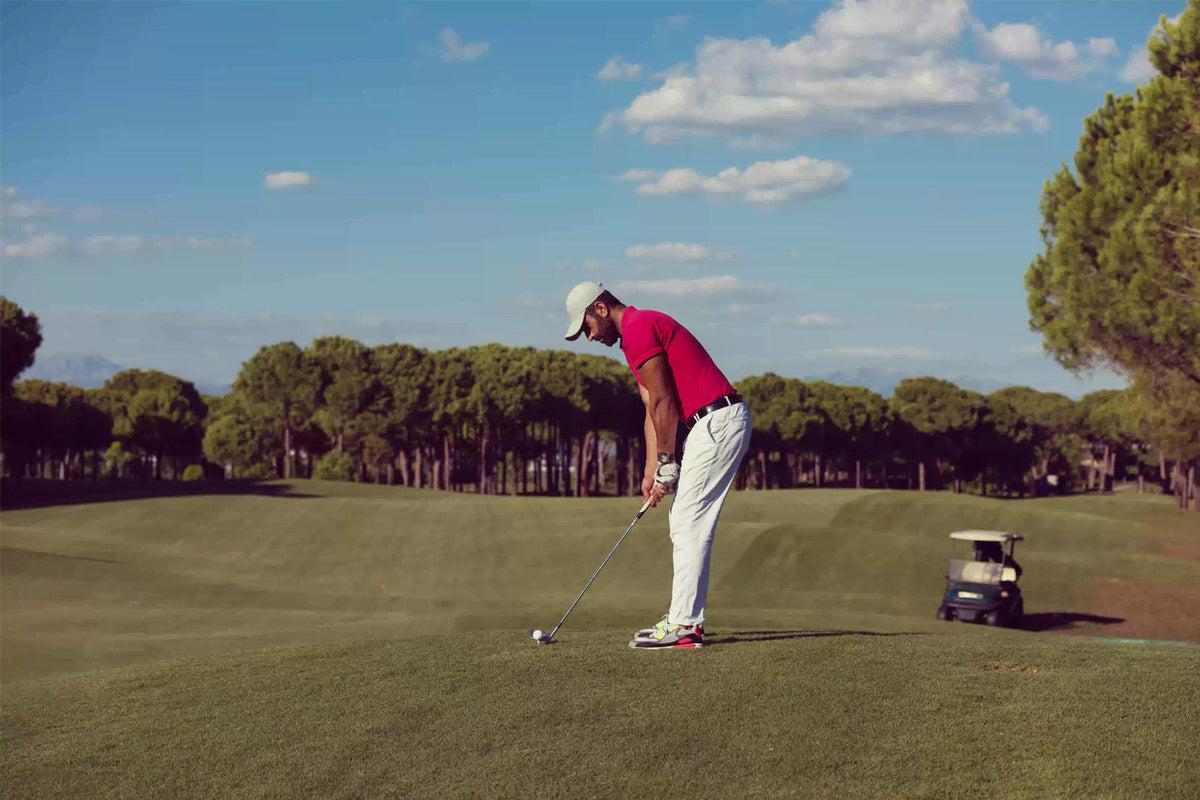
You’ve got 150 yards in — a number you trust and a shot you’ve seen plenty of times before. The lie is clean, the wind doesn’t seem too strong, and nothing about the situation looks especially difficult.
But something still feels off.
Not enough to step away from the shot, just enough to pause for a second longer than usual.
You go anyway. The swing feels solid, contact feels clean, and for a moment it seems like everything should work. But the result still doesn’t match what you pictured. Maybe the ball comes up short. Maybe it flies long. Maybe it just doesn’t behave the way a normal 150-yard shot usually does.
And that’s the frustrating part. If the number was right, why did the shot feel wrong?
Why does a golf shot feel wrong even when the distance is right?
A golf shot can feel wrong even when the distance is correct because the number alone doesn’t fully represent how the shot actually plays. Wind, slope, visuals, elevation, and landing conditions all influence how golfers interpret a shot, and when those elements don’t match the number in front of you, the shot creates a disconnect between expectation and reality. That’s why so many golfers think things like:
- “This doesn’t feel like 150.”
- “Why does my shot feel off?”
- “The number looks right, but something isn’t.”
In most cases, the problem isn’t that the yardage itself is wrong. It’s that the number is incomplete without context.
It’s Not the Number — It’s the Disconnect
When a shot feels off, most golfers immediately assume the distance must be wrong. But more often than not, the yardage itself is technically accurate. The real issue is the disconnect between the number you’re given, what the shot looks like visually, and what you expect the shot to feel like. Once those things stop lining up, confidence drops almost instantly.
That’s the moment where a simple decision — like choosing a club for 150 yards — suddenly stops feeling automatic. And when confidence disappears, hesitation usually shows up before the swing even begins.
Why the Same 150-Yard Shot Can Feel Completely Different
Not every 150-yard shot actually feels like your normal 150, and that’s exactly why so many golfers quietly think:“This doesn’t feel like the number.”
A front pin on a flat green often feels simple. You see the shot clearly, trust the distance, and pull your normal club without much hesitation. But take that same yardage and move the pin to the back, add a slight uphill slope, or place a bunker across the front of the green, and suddenly the shot feels longer, tighter, and less comfortable.
The distance itself hasn’t changed, but the shot suddenly feels completely different. That’s why you can feel completely confident over one 150-yard shot and second-guess the exact same club on the next one. The number stays the same, but the decision doesn’t.
What You’re Actually Reacting To
When a shot feels wrong, you’re usually not reacting to the number itself. You’re reacting to the entire picture around it.
An elevated green can make the target feel farther away. A tight pin position can make the shot feel smaller and more demanding. A wide landing area can make the same distance feel easier and more comfortable. None of those things change the yardage itself, but they absolutely change how the shot feels standing over the ball.
Once the visual picture stops matching your expectation, hesitation starts to creep in. And that’s where decision-making becomes inconsistent, even when the number itself is technically correct.
Your “Go-To Yardage” Isn’t Always Real
Most golfers have a “stock” number for each club, but those distances are usually built around ideal conditions — comfortable lies, neutral wind, clean contact, and a shot shape you trust.
The problem is that golf rarely gives you the exact same situation twice.
When golfers try to apply their perfect 150-yard club to a shot that’s slightly uphill, into the wind, visually intimidating, or landing on a firmer green, something starts to feel off. Not because the swing suddenly changed, but because the situation did.
That’s why a club that normally feels automatic can suddenly feel uncertain without any obvious explanation.
Uncertainty Doesn’t Always Show Up as a Number
One of the hardest parts about golf is that uncertainty rarely announces itself clearly.
You usually don’t stand over the ball thinking, “This shot is playing 162 instead of 150.” More often, you just feel uncomfortable. Something about the shot feels different, even if you can’t fully explain why yet.
That feeling is often your brain picking up on subtle details like wind direction, elevation, landing angle, green firmness, or visual pressure around the target. The problem is that without a clear way to interpret those factors, the uncertainty stays vague — and vague uncertainty usually leads to hesitation.
Why Good Swings Still Produce Bad Results
One of the most confusing experiences in golf is making a swing that feels great and still getting the wrong result. That’s usually when golfers start blaming their mechanics, even though the swing itself may not have been the problem.

A good swing can’t fix a bad read. If the shot is effectively playing longer than expected, the ball may still come up short. If the conditions make the shot play shorter, a perfectly struck shot can still fly long. The quality of the strike doesn’t change the decision underneath it.
That’s why solid swings can still lead to disappointing results when the situation itself is misunderstood.
The Real Problem: You Can’t Fully See the Shot
At the center of all this is a simple gap: you have a number, but not a complete picture. Traditional golf tools are good at measuring distance, but they often struggle to explain how the shot is actually going to play. They can tell you how far the target is, but they usually can’t help you fully understand how wind, slope, visuals, landing areas, and conditions are influencing the shot in front of you.
That’s why so many golfers feel stuck between what the number says and what the shot feels like. And when those two things stop matching, confidence disappears. Because the issue was never just distance. It was interpretation.
What If You Could Actually See the Shot?
What most golfers need isn’t necessarily more information. They need a clearer way to understand the information they already have. That’s where golf technology is starting to shift — from simply giving golfers numbers to helping them better visualize the shot itself. Instead of constantly trying to calculate how wind, slope, elevation, and landing areas might affect the ball, golfers are starting to look for ways to see how the shot actually plays in context.

Unlike a GPS watch on your wrist or a rangefinder in your hand, AR keeps that information within your natural field of view while you’re looking at the course itself. Instead of switching between numbers and the landscape, the goal becomes understanding both together in the same moment. That shift — from interpreting numbers to visualizing outcomes — is what reduces hesitation and builds confidence over the ball. Tools like BirdiLens are built around that idea, helping golfers visualize real-time course information directly in their field of view so decisions feel more natural before the swing.
When the Number and the Shot Finally Match
Once you understand why a shot feels wrong, the game starts to make more sense again. That strange hesitation over the ball doesn’t completely disappear, but now you understand where it’s coming from. Instead of feeling trapped between what the number says and what your instincts are telling you, you start recognizing why the shot feels different in the first place. And once that happens, commitment becomes much easier. Because confidence in golf rarely comes from having more numbers. It comes from finally understanding what those numbers actually mean for the shot in front of you.
Share:
Why Does the Same Golf Club Go Different Distances?
Golf GPS vs Rangefinder: Which Is More Accurate?