
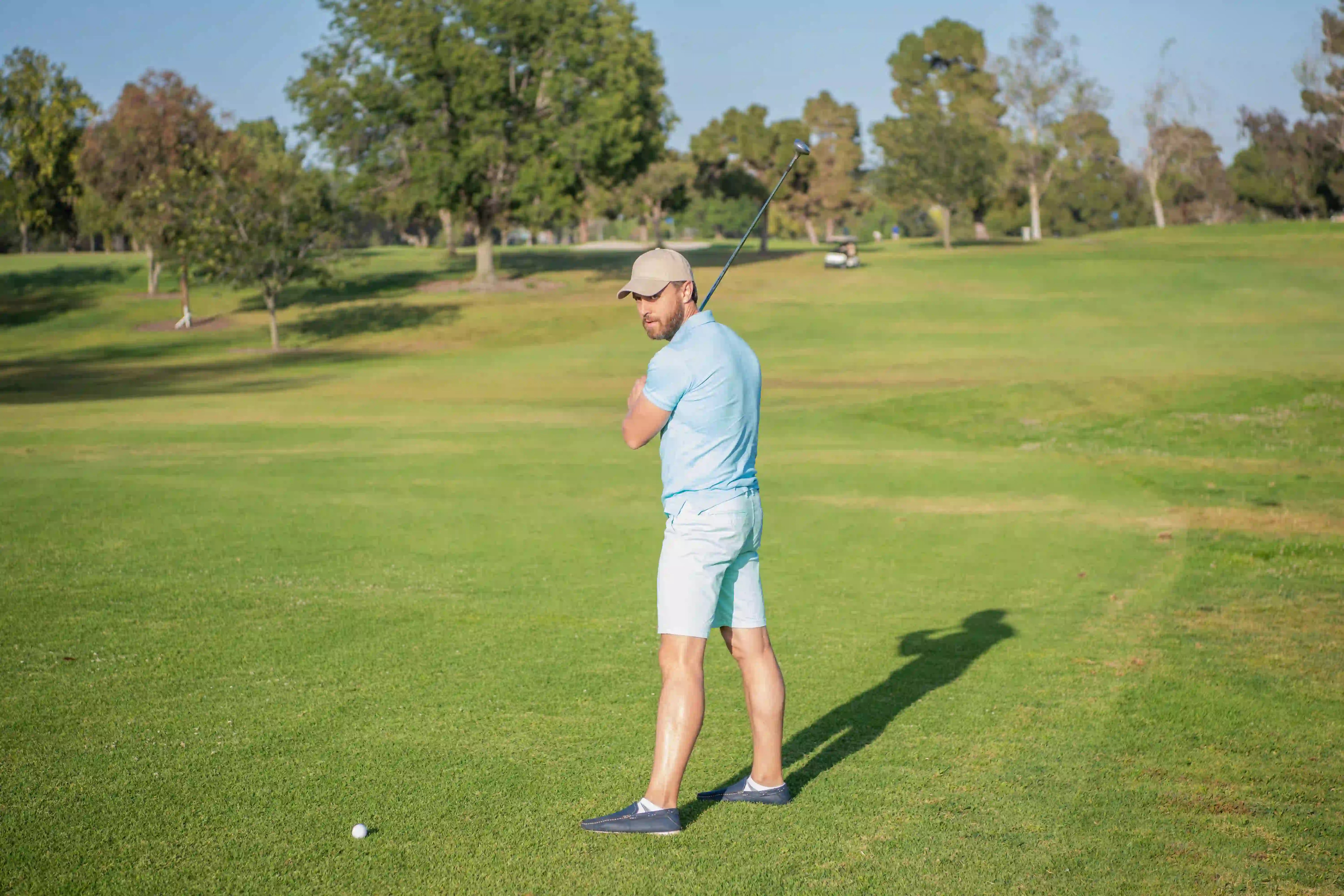
You check the number. 150 yards. A distance you’ve hit plenty of times before.
You make a good swing. It feels right off the face.
And it still finishes short.
Not once—but again. And again.
At some point, you start wondering: If the club is right, why does it keep happening?
Why Do Golf Shots Fall Short Even with the Right Club?
Golf shots often fall short not because of a bad swing, but because real playing conditions—like wind, slope, and imperfect contact—reduce effective distance more than golfers expect. Most players choose a club based on their best-case yardage, but on the course, average shots come up short more often than they realize.
You Did Everything Right—So Why Are You Still Short?
You check the distance, see 150 yards, and pull your usual club. The swing feels solid. Contact is clean. And somehow, the ball still finishes short of the target.
If that sounds familiar, you’re not alone. It’s one of the most common frustrations in golf, and it often leads to the same conclusion: something must be wrong with your swing. Sometimes that’s true—but more often, it isn’t.
Why Amateur Golfers Miss Short More Often Than Long
If you look at real playing patterns, most amateur golfers miss short far more frequently than they miss long. That’s not random—it comes from how club decisions are made.
Many players choose a club based on their “perfect” distance—the one they hit when everything lines up. But those swings don’t happen as often as we think. What shows up more consistently is an average strike, and average almost always travels a bit less.
So when golfers ask why they keep hitting short, the issue is often expectation — especially when the number doesn’t actually reflect how the shot is going to play. The number might be correct, but the assumption behind it isn’t.
It’s Not Always a Bad Swing
It’s easy to blame your swing because it’s the most visible part of the shot. But a slightly imperfect strike doesn’t mean a bad swing—it means a normal one.
Even good players rarely hit every shot perfectly. There’s always a small variation in contact, ball speed, or spin. When your club selection depends on a perfect strike, those small differences start to matter. Over time, they show up as consistent short misses.
In most cases, the swing isn’t failing—the margin is just too tight.
What Factors Cause You to Lose Distance in Golf?
Distance isn’t only about how far you can hit the ball. It’s also about what takes distance away in real conditions.
A slight uphill lie can reduce carry. A bit of wind into your face can do the same. Cooler temperatures, softer ground, or even a slightly heavy lie all chip away at distance in small ways. None of these feel dramatic on their own, but together they can easily turn a well-struck shot into one that finishes short.
The tricky part is that most of these factors don’t show up in the number you’re looking at. They’re part of the shot—but not part of the measurement.
Why “The Right Club” Isn’t Always Right
A lot of golfers say, “I had the right club—I just didn’t hit it.” But if the same outcome keeps happening, it’s worth reconsidering that assumption.
The idea of a “right club” only works if distance is perfectly repeatable. In reality, it isn’t. A club that fits your ideal shot might not fit your typical one, especially when conditions are less than perfect.
That’s why the same 150-yard number can lead to different outcomes. The number stays the same—but how it plays doesn’t.
What Better Players Do Differently
Better players don’t plan for their best swing—they plan for a reliable one. That usually means taking slightly more club and making a controlled swing instead of forcing a perfect strike.
They’re also thinking beyond the number. Where is the safest miss? What happens if the shot comes up short? What’s the percentage play? These questions shape the decision before the swing even begins.
Over time, this approach leads to more consistent outcomes—not because the swing is better, but because the decisions are.
This Is a Decision Problem, Not Just a Distance Problem
At some point, it becomes clear that consistently hitting short isn’t just about execution. It’s about how the shot is being read and how the decision is made.
You’re not just choosing a club—you’re choosing a version of the shot. And if that choice is based on ideal conditions instead of real ones, the result will feel inconsistent, even when the swing is solid.
That’s the gap most golfers run into: trusting the number without fully understanding it.
A Better Way to Think About It
Instead of asking, “Did I hit that poorly?” it can be more useful to ask, “Did I choose the right shot for this situation?”
That shift changes everything. You start accounting for the factors that take distance away, rather than assuming the number is complete. You give yourself margin instead of aiming for perfection.
Over time, that leads to fewer short misses—and a lot more confidence in your decisions.
You Don’t Need a Better Swing—You Need a Better Read
For many golfers, this is where things start to click. The issue isn’t that you can’t hit your numbers—it’s that the numbers you’re using don’t fully reflect the shot in front of you.
Tools like BirdiLens are built around that idea. Not to tell you what to hit, but to help you see more of what’s affecting the shot so your decision accounts for it.
Because most shots that come up short aren’t caused by bad swings.
They’re caused by good swings made on incomplete decisions.
And once you start seeing that, those short misses stop feeling random — and start making a lot more sense.
Share:
How Slope Affects Golf Distance: Uphill vs Downhill Shots Explained
Why Does the Same Golf Club Go Different Distances?