
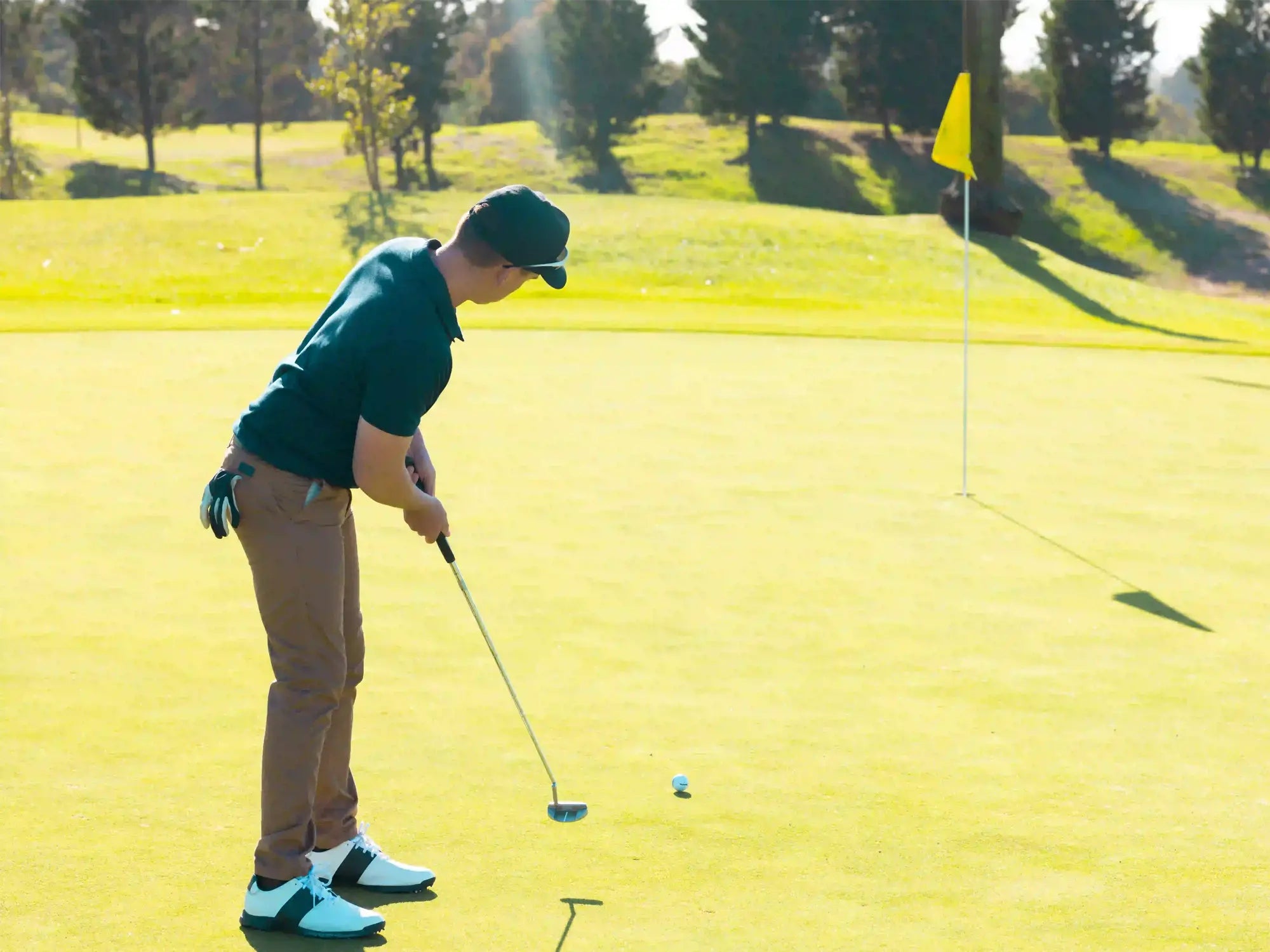
A putt can start on the line you pictured, track toward the cup, and still stop one roll short.
When that happens several times in the same round, it is easy to blame the read or start thinking about the stroke. The problem may be much simpler. The ball did not have enough speed to reach the hole.
That can happen when the greens are slower than expected, a subtle uphill slope goes unnoticed, or the previous comeback putt is still in the back of the golfer's mind. Sometimes the line was chosen without a clear idea of how fast the ball should be moving when it reaches the hole.
Better putting distance control begins with matching the intended roll to the green in front of you.
Why Do I Leave Putts Short?
Putts often finish short because golfers misjudge green speed, underread uphill slope, or protect against the comeback putt. Better distance control starts with calibrating the green, choosing an intended finishing pace, and reading line and speed together.
Why Putts Keep Finishing Short
Not every short putt comes from the same mistake.
The greens may be slower than they looked from the fairway. A putt that appears flat may be climbing slightly. Damp turf can take speed out of the ball, while grass growth and foot traffic can change how the surface plays later in the day.
The golfer may also be carrying the wrong speed expectation into the round. A firm practice green from earlier in the week can leave a lasting impression. So can the first downhill putt of the day, especially if it rolled several feet past.
Green speed is not a permanent setting. It can change between courses, between rounds, and even during the same round. When the expected speed and the actual surface do not match, putts tend to finish in the same place: short of the cup.
One short putt may be a minor misread. Three or four usually signal a pattern worth noticing.
Read Speed Before You Lock In the Line
A putt does not have one correct line independent of speed.
A firmer putt can hold a more direct line. A slower putt has more time to move with the slope. Both may have a chance to reach the cup, but they require different starting points.
Problems often begin when a golfer chooses the line first and treats speed as a separate decision. If the intended pace remains unclear, the final stroke may become cautious. The ball starts somewhere near the chosen line but loses speed before reaching the area where that line was supposed to work.
This is why a putt that looked like a good read can still finish short and low.
A clearer approach is to picture how the ball should arrive at the cup before settling on the start line. The idea is similar to learning to see the shot before you hit it. The picture includes the full roll, not only its initial direction.
A Quick Speed Check Before the Round
The practice green is most useful as a speed gauge for the day.
A few putts from short, medium, and longer distances can reveal whether the ball is rolling farther or shorter than expected. The result matters more than the number of putts made.
Three quick checks are usually enough:
- Roll a few balls from different distances.
- Watch where they finish rather than judging the session by makes.
- Compare at least one uphill putt with one downhill putt.
The goal is not to rebuild a putting stroke five minutes before the round. It is to learn how far the ball is rolling today.
That reference can prevent the first several holes from becoming an extended green-speed test. It also gives the golfer something current to trust instead of relying on the pace from another course or another week.
Uphill and Downhill Putts Change the Required Pace
Obvious slopes usually get attention. Subtle ones cause more confusion.
A putt that climbs gradually may not look dramatically uphill from behind the ball. The line appears manageable, the stroke feels normal, and the ball loses its final few feet earlier than expected.
Downhill putts create a different problem. The golfer can see the danger of running the ball past and may protect against it too early. Instead of choosing a slower but complete roll, the putt is sent away without enough pace to reach the cup.
Side slope connects speed and line even more closely. A dying ball will take more break near the hole. A firmer ball may hold its line longer. Choosing a start line without deciding on pace leaves part of the read unfinished.
There is no universal slope adjustment that works on every green. A gentle uphill putt on fast, dry turf may need less extra pace than the same-looking putt on a slower or damp surface. The useful adjustment comes from combining the visible slope with what the ball has already shown during the round.
The Comeback Putt Can Quietly Change the First One
Nobody wants to turn a reasonable birdie attempt into a nervous four-footer coming back.
That concern can influence pace without becoming a conscious decision. After one putt runs well past the cup, the next few strokes may become increasingly protective. The golfer still intends to reach the hole, but the ball is given just enough speed to avoid trouble rather than enough speed to complete the intended roll.
Defensive pace is not always good pace.
The answer is not to send every putt several feet past the hole. A short downhill putt and a long uphill putt do not need the same finishing target. The goal is simply to give the ball enough pace to reach the cup while keeping the likely comeback manageable.
That balance changes with distance, slope, green speed, and how much break appears near the hole. It cannot be reduced to one fixed "past the hole" number.

What to Change When Putts Keep Coming Up Short
When several putts finish short, the adjustment does not have to become technical.
Start by treating the result as a pattern from that round. If the ball has repeatedly stopped one or two feet short, the green is asking for more pace than the golfer has been supplying.
The next putt needs a more definite finishing picture. Instead of imagining the ball dying at the front edge, picture it completing the roll through the cup. That change gives the stroke a clearer distance to match.
Extra distance should come from allowing enough stroke length for the putt, not from a sudden hit at the ball. A quick burst of effort can produce speed, but it often makes the result harder to predict.
The adjustment may also depend on location. If the short putts were all uphill, the overall green-speed read may still be fine. If flat, uphill, and downhill putts are all stopping short, the broader pace expectation probably needs to move.
A round provides new information with every roll. The useful response is to update the speed picture before the same miss happens again.
Where Green Maps and Putting Technology Could Help
Putting technology is most useful when it makes slope and pace easier to understand without turning the putt into another data problem.
How Green Maps Support Speed and Line
A green map can reveal the direction and severity of a slope that may be difficult to see from ground level. An app-based scan can add another reference by showing how the surface changes around the intended path.
The map still cannot separate line from speed. A firmer putt may hold a more direct line, while a slower putt has more time to move with the slope. Any useful putting recommendation needs to account for the intended pace, not simply point the ball in one direction.

BirdiLens is developing putting support around green maps, app-based scanning, and AI-generated guidance. The aim is to help golfers connect slope, start line, and intended pace while leaving speed and execution in the golfer's hands.
If that information eventually moves into an eyes-up display, it could also reduce the need to look back and forth between the green and a phone. As discussed in playing golf without looking down at a phone, the real advantage comes from keeping the information simple enough to use without interrupting the shot.
Are AI Putting Lines Legal in Golf Tournaments?
AI-generated putting lines are better suited to practice and casual play.
Under USGA Rule 4.3, players may get distance and directional information, but they may not use equipment to interpret distance or direction by recommending a line of play or club selection based on the location of the player's ball.
A tournament committee may also adopt Model Local Rule G-12, which prohibits using written, printed, electronic, or digital materials to help read the line of play for a stroke made from the putting green.
Golfers should check both the feature being used and the rules in effect before the round.
The Goal Is Better Pace, Not a Perfect Read
Even a good read needs the right speed.
Occasionally leaving a putt short is part of the game. Repeatedly finishing short usually means the golfer has not matched the intended pace to the green, slope, or situation.
The solution does not have to begin with a new stroke thought. It may be as simple as checking how the ball is rolling that day, deciding how it should arrive at the cup, and choosing the line around that speed.
A clear pace gives the putt a chance. The line only works once the ball gets there.
Frequently Asked Questions
Why do my putts keep coming up short?
Putts often come up short when the green is slower than expected, an uphill slope is underestimated, or the golfer is protecting against a long comeback putt. An unclear finishing pace can also lead to a cautious stroke.
How can I improve putting distance control?
Use the practice green to compare short, medium, and long rolls before the round. Watch where the ball finishes, include an uphill and downhill putt, and adjust the intended pace when a repeated pattern appears during play.
Should I always try to roll the ball past the hole?
Not by a fixed distance. The intended pace should give the ball enough speed to reach the cup without creating an unnecessarily difficult comeback. The right finishing speed changes with the length, slope, and speed of the putt.
Does putting speed change the line?
Yes. A firmer putt generally takes less break, while a slower putt has more time to move with the slope. The start line only makes sense when it is connected to the intended speed.
Share:
How to Commit to a Golf Shot Before You Swing
How to Choose the Right Golf Technology for Your Game