
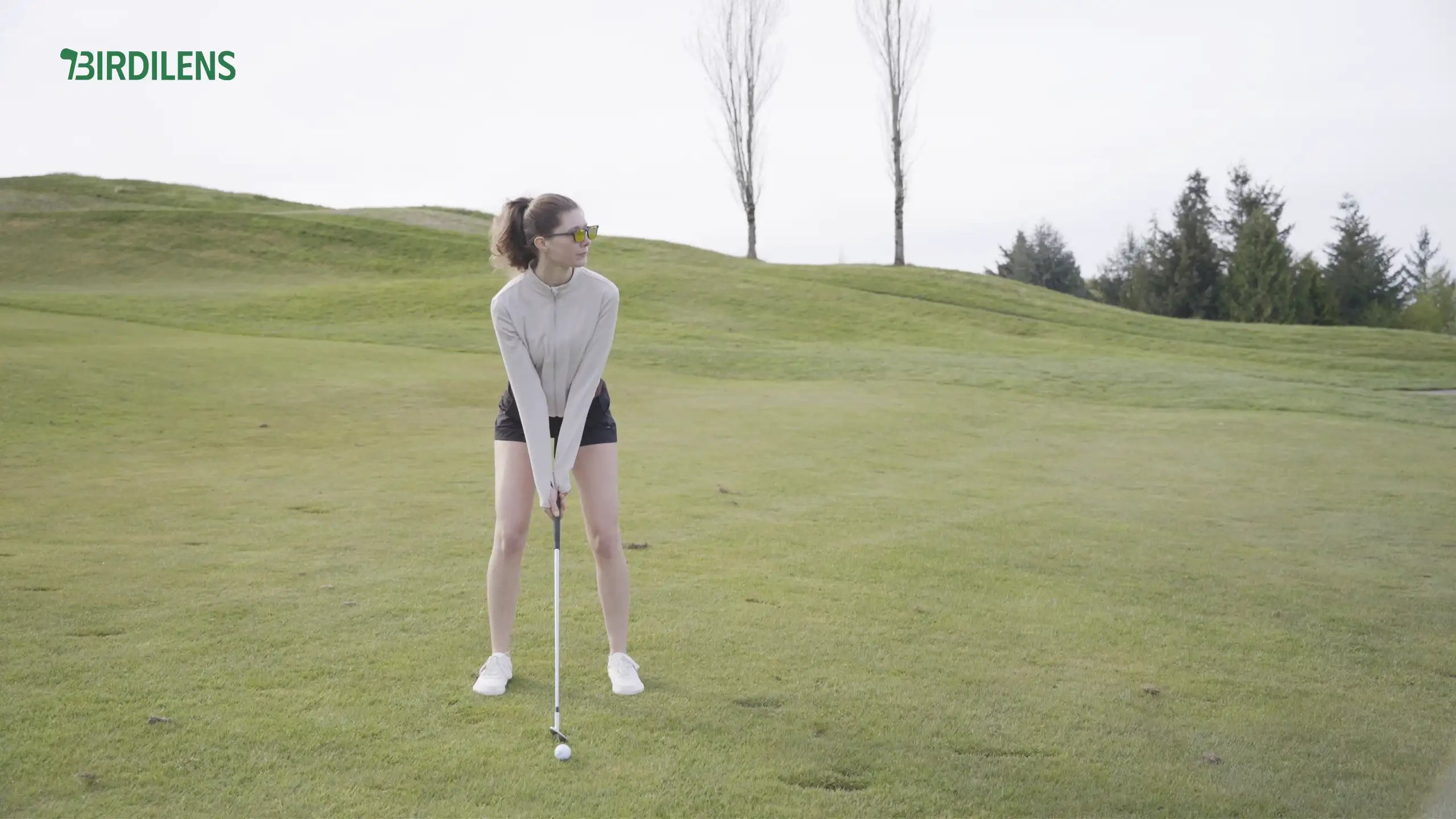
One day, your 7-iron carries 150 yards without much effort. A few days later, the same club keeps coming up five or six yards short. If you are struggling with inconsistent golf distances, you are not alone. The swing may not feel dramatically different, but the result is.
That kind of variation is normal. Golf distances are not fixed specifications stamped onto each club. They reflect the swing you brought that day, the contact you made, and the conditions around the shot.
The useful question is not whether every 7-iron travels the same distance. It is whether you understand the range that shows up most often.
Why do golf distances change from day to day?
Golf distances change because swing speed, contact, weather, fatigue, and lie are never exactly the same. Those differences affect launch, spin, and carry. A useful club distance is therefore a normal carry range, not one fixed number.
Your 7-Iron Has a Range, Not One Number
Golfers often describe a club with a single number: a 150-yard 7-iron, a 175-yard 5-iron, or a 220-yard hybrid.
That number can be useful as shorthand, but it rarely tells the full story. A player who calls a 7-iron a 150-yard club may normally carry it anywhere from 145 to 152. A flushed shot might fly farther. Slightly slower speed or off-center contact might leave it short.
That does not make the club unreliable. It means the player has a carry window.
A stock carry should represent the distance that appears regularly, not the longest shot in a range session. That is also why there is no perfect club for any distance. The club that fits depends on the player's normal range and the shot in front of them.
Most Daily Variation Starts at Impact
Two swings can look and feel nearly identical while producing different carry numbers.
A small change in club speed can move the distance. So can contact that shifts away from the center of the face. When less energy reaches the ball, ball speed drops, even if the swing still felt solid.
Launch and spin may change with the contact as well. A shot that launches higher with more spin can fly differently from one struck with a flatter flight, despite coming from the same club and similar club speed.
This is where launch monitor numbers become useful. Ball speed, launch, spin, and smash factor can help explain what changed at impact, but no single metric tells the whole story. Their relationship is covered in Understanding Launch Monitor Data.
The important part here is the pattern. One short shot may be a mishit. A full session running five yards short suggests something broader changed that day.
The Same Swing Can Produce a Different Result
Not every distance change starts with the golfer.
Cold conditions can take some distance out of a shot, especially when both the air and the golf ball are cold. A headwind can make small differences in launch and spin more noticeable. The same iron shot that reaches the target on a calm afternoon may finish short into a steady breeze.
Wind also does not affect every ball flight in the same way. Shots with similar carry numbers in calm conditions can react differently in the wind because of their launch and spin. That interaction is explained in How Wind Affects Golf Shots.
Elevation can also change how far a shot plays without changing the golfer’s underlying club distance. An uphill or downhill target changes the effective playing distance, as explained in How Slope Affects Golf Distance.
Turf changes the result in a different way. Firm ground adds rollout after the ball lands, while soft or wet ground can make total distance look much shorter. That is not necessarily a change in carry.
The lie can affect both. Rough, wet grass, or an uneven stance can alter contact, launch, and spin before the ball ever reaches the landing area. A 150-yard number from the fairway does not automatically carry over to a ball sitting down in rough.
These are shot conditions, not permanent changes to a golfer's club distances. But on the course, they still affect the number that matters.
Fatigue Can Shift Your Normal
The swing available on the first tee may not be the swing available late in the round.
A player can lose a little speed after walking several miles, hitting repeated shots, or playing on tired legs. The change may be too small to feel obvious, but it can still appear in the carry numbers.
Fatigue can also show up through contact. A golfer may start finding the ball slightly low on the face or away from the center more often. Neither miss has to look severe to take a few yards off an iron.
Day-to-day differences can begin before the round. A long practice session the previous evening, limited sleep, stiffness, or simply not feeling sharp can shift the normal range.
That does not mean every short shot should be blamed on fatigue. The more useful clue is repetition. If several clubs are consistently carrying a little shorter than usual, the golfer may be seeing that day's version of the swing rather than a sudden problem with each club.
What Multiple Launch Monitor Sessions Reveal
A single launch monitor session captures one day.
It may be a great ball-striking day. It may also be a morning when speed is down, contact is inconsistent, or the swing never feels settled. Building a complete distance chart from that session can give too much weight to temporary performance.

Multiple sessions make the recurring range easier to see. If most solid 8-irons carry between 140 and 146 yards across several days, that window is more useful than one shot that reached 151.
The same data can reveal whether a change affects the whole bag. If every club is shorter during one session, swing speed, fatigue, or the environment may be involved. If only one club produces unusual results, contact or equipment becomes more relevant.
BirdiLens launch monitor data can help golfers build a personal carry baseline and identify recurring carry ranges and shot patterns across multiple sessions. During a round, BirdiLens can combine that training history with current on-course conditions to provide an AI-powered club recommendation.
Once those patterns are clear, they can become practical on-course information instead of staying on the range. That connection is covered in How to Use Launch Monitor Data to Make Better On-Course Decisions.
A Distance Window Is More Useful on the Course
A fixed number creates a simple expectation: the club either reaches that number or it does not. A carry window gives the golfer a more realistic picture.
That difference matters most when the shot has a clear minimum. If a bunker requires 145 yards to carry and the selected club normally flies 143 to 150, its average may look suitable while the low end of the range says otherwise.
The situation changes when there is open space short of the target. In that case, a few yards of variation may carry little consequence.
The golfer's performance that day matters too. If several early iron shots have been finishing short, continuing to choose clubs from a career-best distance chart does not make much sense. The baseline has not disappeared, but the day's pattern deserves some weight.
Carry is still only one part of the decision. Lie, target, trouble, and the acceptable miss belong in the broader golf pre-shot checklist.
The Useful Distance Is the One You Can Repeat
Inconsistent golf distances do not always point to an inconsistent swing. Small variations are built into the game.
Speed changes. Contact moves around the face. Weather shifts. Lies change. Energy fades. Even good shots will not finish on the same number every time.
A personal-best carry shows what can happen. A normal carry window shows what is likely to happen and provides a more useful reference on the course.
Frequently Asked Questions
Is it normal for golf club distances to vary?
Yes. Small changes in swing speed, contact, weather, fatigue, and lie can affect carry distance. A few yards of variation is not unusual, even when the swing feels similar.
Why do I hit my irons different distances on different days?
Iron distances can change when ball speed, launch, or spin changes. Those differences often begin with slightly different speed or contact and may be amplified by weather, fatigue, or the lie.
Should I use my average or longest golf distance?
A normal stock carry range is more useful than a personal-best distance. The longest shot shows what is possible under favorable conditions, but it may not represent the distance that appears regularly.
Share:
The Future of AR Golf Glasses: Why Golf's Next Screen May Not Be a Screen
How to Commit to a Golf Shot Before You Swing